Precision down to the millimetre in the operating theatre
What sounded like science fiction just a few decades ago has long been part of everyday medical practice at Wels-Grieskirchen Hospital. The ‘da Vinci’ robot-assisted surgical system has been in use there since 2011. Since then, just under 5,000 procedures have been carried out using this technology, with around 500 planned for this year alone.
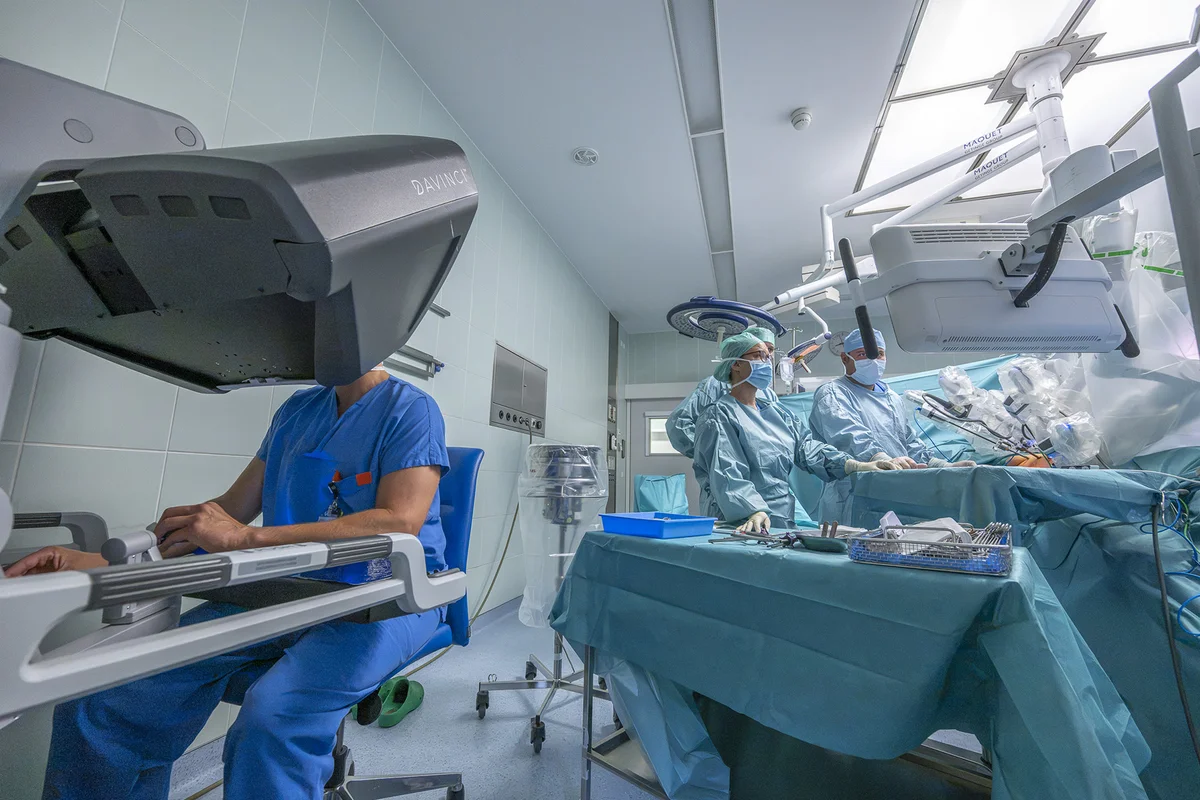
But how does a robot-assisted operation work? Contrary to what the name might suggest, the robot does not operate independently. The surgeon controls the instruments from a console. All hand movements are transmitted with high precision and are completely tremor-free. Articulated instrument tips enable exceptionally precise movements, even in the tightest of spaces. At the same time, a high-resolution, highly magnified 3D image provides detailed views of the surgical site.
Gentler surgery means a quicker recovery
The benefits of this technology are particularly noticeable for patients. Many procedures can be carried out using minimally invasive techniques, i.e. via very small incisions in the skin. This preserves healthy tissue, can result in less blood loss and may reduce post-operative pain.
Recovery can also be speeded up: smaller wounds and less strain on the body often allow for earlier mobilisation and a quicker return to everyday life. The precise instrument guidance also helps to preserve sensitive nerves, blood vessels and vital organ functions.
The da Vinci system is used in urology, general and visceral surgery, gynaecology and thoracic surgery. The most suitable surgical method is decided on a case-by-case basis.
World premiere in knee surgery
A recent innovation at Wels-Grieskirchen Hospital demonstrates just how rapidly robotic surgery is advancing. According to the hospital, this is the first time anywhere in the world that the ‘Robin’ surgical robot has been used to adapt specialised artificial knee joints with exceptional precision to natural movement.
Unlike the da Vinci system, ‘Robin’ assists surgeons in analysing and aligning the knee joint. During the operation, the range of motion is continuously monitored. This allows the position of the implant to be individually tailored to the natural axis of the leg, rather than simply aligning the leg as straight as possible.
The aim: a knee joint that feels as natural as possible, functions stably and causes less discomfort. According to Head of Orthopaedics Björn Rath, this means patients regain mobility more quickly and experience less pain. Further studies are needed to determine the extent of the long-term benefit compared with conventional procedures.
Further information at ORF ON
#schongenial – when cutting-edge technology not only makes operations more precise but also helps people return to a pain-free, independent life more quickly.