Research meets industrial practice
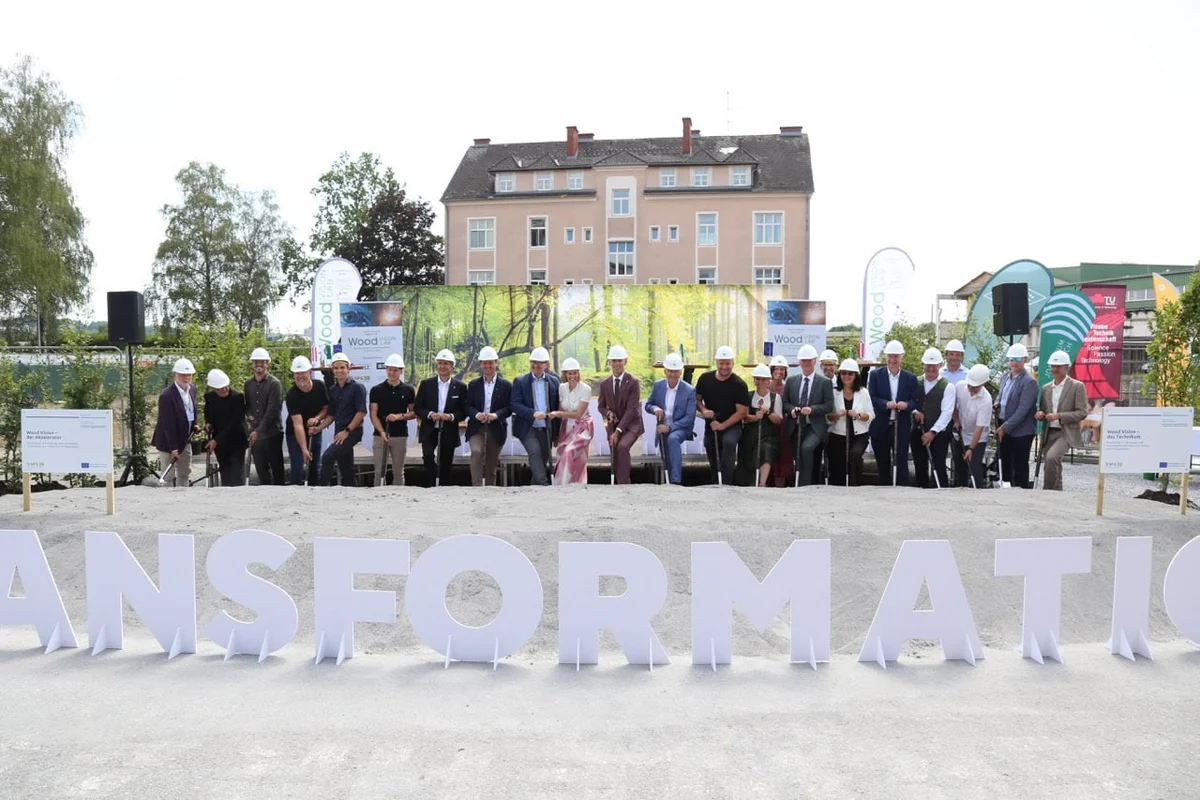
Offices, a technical centre and a research laboratory are being built across an area of more than 2,000 square metres. The aim is to further develop wood for new industrial applications and to closely integrate research, technology and commercial implementation. The focus is on lightweight yet resilient timber and hybrid components that could be used in the future in sectors such as mobility or mechanical engineering.
Digitalisation, artificial intelligence and robotics play a central role in this. The “RobOptiCut” research project demonstrates how this can work: sensors, AI-supported image processing and robots are set to make the processing of thin wood veneers more efficient and more than double the material yield. Less waste means not only lower costs but also a better carbon footprint.
Why this project affects us all
However, the true significance of the Wood Vision Lab extends far beyond research and industry. After all, one of the major societal questions of our time is: how can we maintain our prosperity whilst at the same time managing our resources far more sustainably?
Wood can be part of the answer. If we succeed in making this renewable raw material suitable for applications that have hitherto required more energy- and resource-intensive materials, this will open up new possibilities for a more climate-friendly industry. It is also crucial to use existing wood as efficiently as possible. Technologies that reduce material waste and enable the production of more high-quality products from the same quantity of raw material are therefore becoming increasingly important.
At the same time, the Wood Vision Lab demonstrates that climate protection and economic development need not be at odds with one another. New wood-based technologies can boost regional value creation, build up expertise and create skilled jobs in the long term. Research does not remain confined to the laboratory: companies are specifically involved so that findings can be translated more quickly into marketable products and industrial mass production.
This is creating a model in Styria for how transformation can work: science, industry and the public sector are working together to turn a regrowing raw material available locally into a modern, high-tech material.
Wood + AI + Robotics = #schongenial