2 to 3 megawatts of power using hydrogen
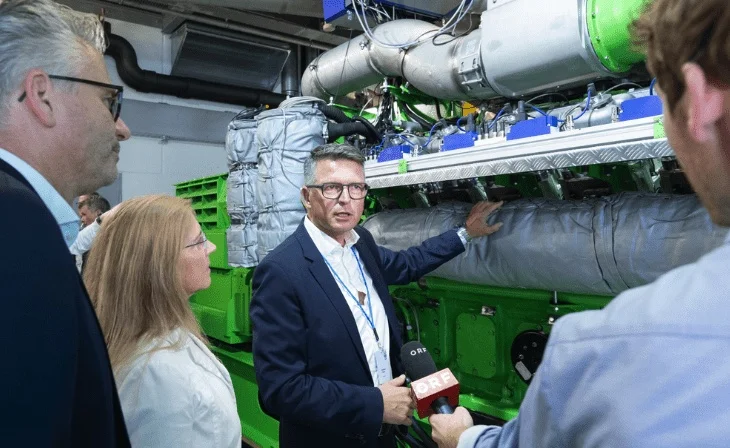
At the heart of the plant is a large internal combustion engine that runs on hydrogen rather than diesel or natural gas. Together with a special exhaust gas after-treatment system, it forms a complete system with an electrical output of around two to three megawatts.
This places the hydrogen engine in a power class also achieved by today’s large natural gas engines. At the same time, greenhouse gas emissions are set to fall by 97 per cent compared with the reference defined by the LEC.
However, the system does not operate entirely without emissions. Environmental impacts arise, amongst other things, during the production and transport of the hydrogen. Furthermore, due to technical constraints, small quantities of lubricating oil enter the engine during operation.
What does ‘Zero Impact’ mean?
The LEC describes its system as a ‘zero-impact demonstrator’. This does not mean that there is absolutely no impact on the environment. Instead, the research centre has developed its own scientific methodology to assess the overall environmental impact.
This takes into account not only the emissions produced directly during engine operation, but also the production of the fuel. According to this methodology, a technology is classified as ‘Zero Impact’ if its environmental impact amounts to less than five per cent of that of a comparable average reference technology.
Electricity when wind and sun fail to deliver
The technology could prove particularly interesting as a complement to renewable energies. After all, wind turbines and photovoltaic systems do not generate the same amount of electricity at all times. At the same time, demand for electricity is rising, for example due to increasing electrification and the expansion of data centres and AI applications.
Large hydrogen-powered engines could step in here in future as a flexible reserve and rapidly provide energy when needed. The LEC sees potential applications, for example, at industrial sites, data centres, critical infrastructure or decentralised facilities.
Waste heat is also utilised
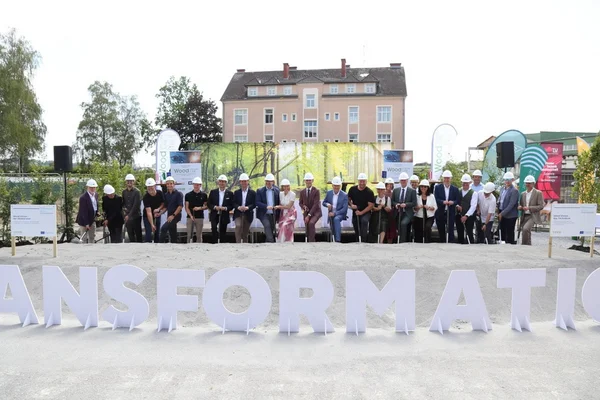
The demonstrator is located in the Inffeld Innovation District at Graz University of Technology and is directly integrated into the local energy system. The electricity generated during the tests is fed into the local grid.
But that’s not all: the heat from the engine is also utilised. Via a heat recovery system, up to 1.5 megawatts of thermal power can be fed into Graz University of Technology’s district heating network. In this way, the research facility simultaneously becomes a practical component of the campus’s energy supply.
#schongenial – it’s brilliant to see that hydrogen can also power large engines with an output of several megawatts, thereby offering a potentially more climate-friendly solution for precisely those areas where a great deal of energy must be available reliably and flexibly.