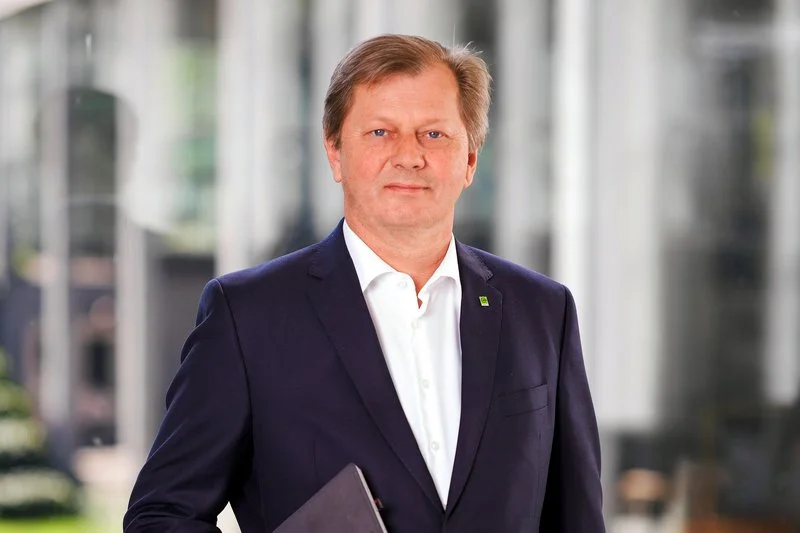
#schongenial: Mr Wolfslehner, continuing professional development is often associated with the term ‘lifelong learning’. Is that still relevant today, or do we actually need to take it a step further?
Harald Wolfslehner: Lifelong learning is more relevant than ever – but I’d prefer to talk about learning that accompanies us throughout life. Continuing professional development should support people throughout their entire career. The key is one’s attitude: staying curious, being open to new ideas and continually developing one’s own knowledge. In the field of artificial intelligence in particular, we can see just how quickly working methods are changing. It is therefore not just a matter of having knowledge, but of contextualising it, applying it sensibly and making it useful for everyday working life. Our current slogan, ‘Stay curious about the future’, sums this up very well.
#schongenial: What does this mean for an educational institution like WIFI Upper Austria?
Harald Wolfslehner: For us, this means staying closely connected to business and the world of work, and translating new developments into concrete, practical training programmes as early as possible. Our clients should be able to apply what they’ve learnt directly in their day-to-day working lives. At the same time, guidance is needed, as not every innovation is automatically relevant. Our task is to work with our trainers and, in close collaboration with the business community, to identify precisely the skills that will actually help people and businesses in the region to progress.
#schongenial: Does this mean that the ability to learn is becoming more important than individual qualifications?
Harald Wolfslehner: Professional qualifications remain the foundation. WIFI OÖ acts as a reliable partner in career development, offering practical training and further education that open up new career prospects. In addition, the ability to learn is becoming increasingly essential. Those who are prepared to take on board new information, understand how things are connected and apply knowledge to new situations can play an active role in shaping change.
#schongenial: How important is this ability to learn for businesses?
Harald Wolfslehner: For companies, the ability to learn is a key factor for success. New technologies alone do not bring about progress – what matters is how well they are understood and utilised within the organisation. Continuing professional development helps to build and retain specialist knowledge, capitalise on new opportunities and translate changes into tangible improvements. Particularly in challenging economic times, continuing professional development is therefore an investment in competitiveness, innovative strength and the company’s skilled workforce.
#schongenial: And taking it a step further: what is the social significance of continuing professional development?
Harald Wolfslehner: Continuing professional development fosters participation and opens up prospects. As technologies, job profiles and requirements change, as many people as possible should have the opportunity to develop further and actively make the most of their career prospects. This applies just as much to apprentices as it does to experienced skilled workers, managers and entrepreneurs. Education opens up opportunities, strengthens independence and helps ensure that change can lead to progress for as many people as possible.
#schongenial: Against this backdrop, what would be your wish for how we approach continuing education?
Harald Wolfslehner: I would like us to see further education even more as an opportunity – and not just when something is missing or no longer working. Curiosity is the best starting point: What else would I like to be able to do? In which direction do I want to develop? What opportunities does new knowledge open up for me? If we foster this mindset, lifelong learning will become the norm. And this is precisely where we at WIFI OÖ aim to be a reliable partner – practical, personal and closely attuned to the needs of people and the economy.
#schongenial: Thank you very much for your time and these extremely fascinating insights.