After all, age-appropriate housing is far more than just a service for older people. Step-free access, lifts, spacious layouts and an easily accessible neighbourhood make everyday life easier for families with children as well as for people with temporary mobility issues. At the same time, they enhance independence, promote social participation and, in the long term, also relieve the burden on the health and care system. This makes age-appropriate housing a key building block of a sustainable society.
This is precisely why the topic of ‘housing for older people’ has been a key consideration at WAG from the very beginning. The aim is to design housing in such a way that people can live independently for as long as possible, regardless of their age or life circumstances.
Accessibility as a quality standard
In new-build projects, step-free access, sufficiently wide doors, lifts to all floors and easily accessible control panels have long been standard features. Accessibility is not seen as an additional service, but as a fundamental quality standard. Buildings should cater for a wide variety of life stages over the course of decades. Spacious circulation areas, clear wayfinding and flexible floor plans make everyday life easier for families with pushchairs as well as for people with reduced mobility. “For us, good living means creating spaces that adapt to people, rather than the other way round. Anyone who builds with accessibility in mind today is investing in quality of life, sustainability and the future of our society,” emphasises WAG Managing Director Jürgen Harrich. He continues: “Equally important is the integration of housing and services. Mobile care, advisory services or other support services should be readily available when needed, without restricting residents’ independence.”
Quality of living doesn’t end at the front door
This commitment is also consistently pursued in the existing housing stock. During refurbishments, for example, lifts are retrofitted or access points improved. At the same time, the entire living environment is taken into account. After all, even the best flat is of little use if there is a lack of shopping facilities, medical care, public transport or community spaces. Modern neighbourhood development therefore creates interconnected living spaces that promote independence and enable social participation.
Successful examples from Linz
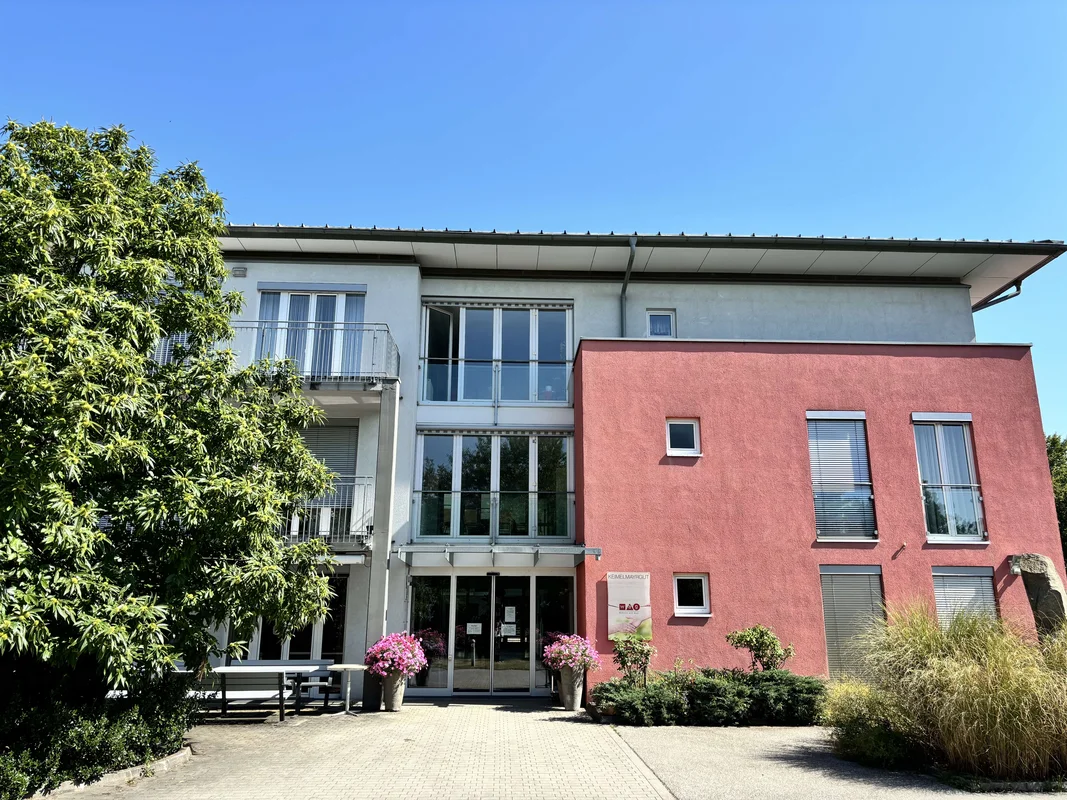
One example of how this concept works in practice is the Keimelmayrgut complex at Bindermichl. There, 37 barrier-free and age-appropriate flats have been built, combining independent living with a range of services tailored to residents’ needs. Communal spaces and shared activities strengthen a sense of community, whilst the excellent infrastructure – including local shops, a pharmacy, doctors and public transport – makes everyday life easier.
The revitalised Bindermichl courtyards also exemplify forward-looking regeneration of existing buildings. Retrofitted lifts, energy-efficiency upgrades and attractive inner courtyards enable residents to remain in their familiar surroundings whilst benefiting from a higher standard of living.
We believe that housing projects like these are not only urgently needed, but also #absolutelybrilliant.