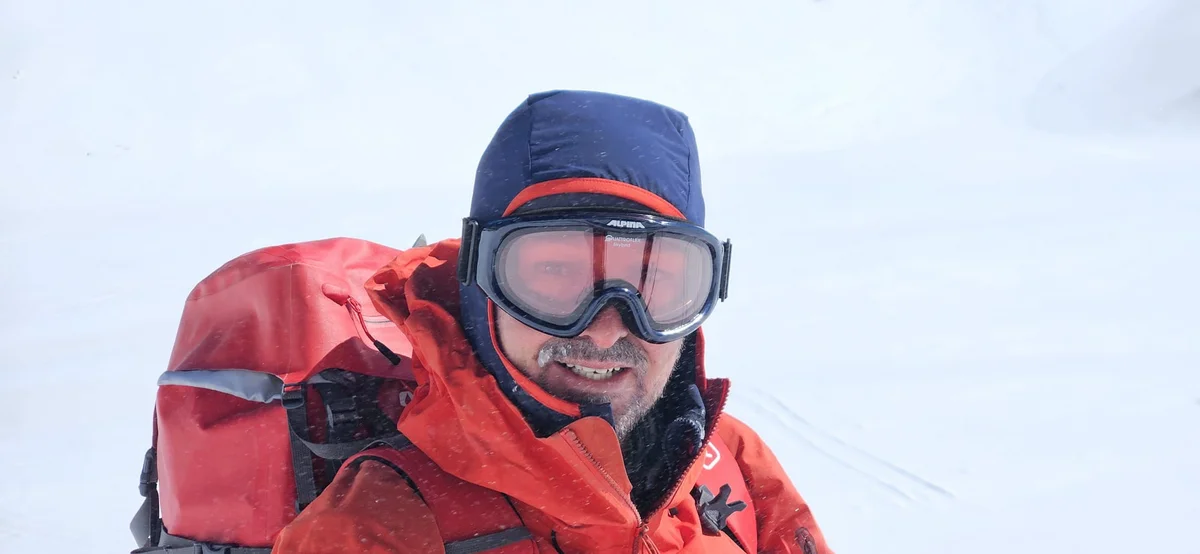
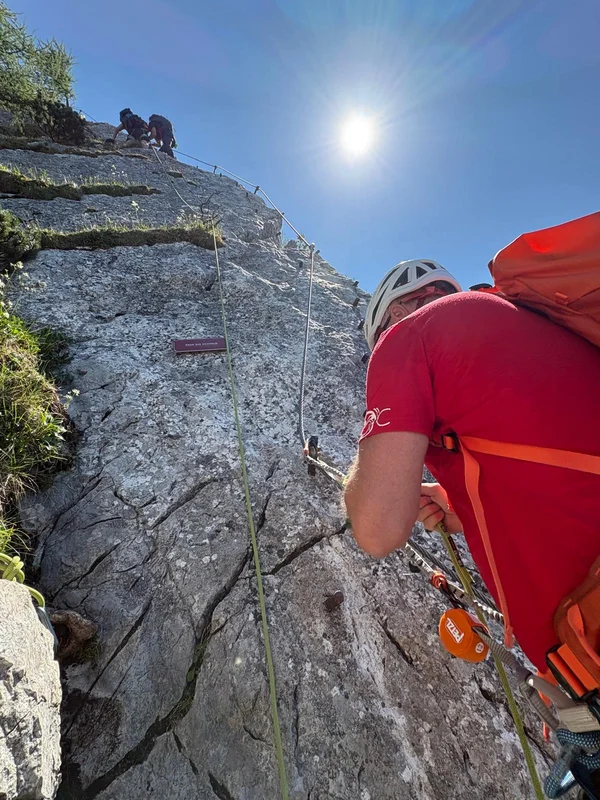
This commitment is also sustained by people who have devoted a considerable amount of their free time to it over many years. One of them is Michael Klement, a customer adviser at OÖ Versicherung in Bad Ischl. He has been actively involved in mountain rescue for almost three decades. His love of the mountains led him to this voluntary role, whilst the joy of helping others and the sense of community continue to keep him motivated to this day. In an interview with #schongenial, he talks about his motivations, the demands placed on mountain rescuers and what it means to keep a clear head even in challenging situations.
#schongenial: How did you come to volunteer with the mountain rescue service?
Michael Klement: I’ve always been fascinated by the mountains and have always enjoyed being out and about there. At the same time, it was important to me to get involved with a voluntary organisation and do something meaningful for others. That’s how I came to join the mountain rescue service 27 years ago now.
#schongenial: What motivates you to devote your free time to mountain rescue?
Michael Klement: For me, the main thing is clearly being able to help people in emergency situations. But at the same time, the sense of community plays a big part. In mountain rescue, you have to be able to rely on one another. This creates a special bond between colleagues.
#schongenial: What does a typical mountain rescue operation look like?
Michael Klement: The operation begins with an alert on my mobile phone. We then drive to the base or directly to an agreed meeting point. There, we receive further information and instructions. To ensure we can respond quickly, I always keep my personal kit in the car.
#schongenial: What training and skills do you need to work in mountain rescue?
Michael Klement: You should already have some alpine experience. This includes, for example, climbing, ski touring and high-altitude mountaineering. Then the training begins at the relevant local branch. In addition, you complete five regional courses. Only then is your training as a mountain rescuer complete.
#schongenial: Is there one mission that has particularly stuck in your memory? Why?
Michael Klement: It’s difficult to narrow it down to a single mission. There are some truly wonderful moments, such as when you’re able to save someone for whom you’d initially had little hope. At the same time, we also experience distressing situations where any help comes too late and we have to bring the deceased down to the valley. Unfortunately, that’s also part of our job. Both sides stay with you.
#schongenial: What do you see as the biggest challenges or dangers during a mission?
Michael Klement: It’s particularly important to always keep a clear head yourself. Every step must be carefully considered. After all, during an operation, you’re not just responsible for yourself. The safety of your colleagues can also depend on the decisions you make. That’s why concentration, experience and mutual trust are particularly important.
#schongenial: How do you deal with difficult or emotionally draining situations?
Michael Klement: We have the option of speaking to a crisis intervention team. However, a lot is also worked through within the group. Sitting down together after an operation, talking to one another and discussing what we’ve been through helps a great deal. This exchange amongst ourselves is important to us.
#schongenial: How do you balance your voluntary work with the mountain rescue service with your job, family and leisure time?
Michael Klement: It only works if there’s understanding from all sides – both within the family and in the workplace. Of course, this commitment does take up some of your own free time. You have to be prepared to invest that time. For me, though, it’s definitely worth it.
#schongenial: We’d like to thank you not only for the interview, but above all for your commitment, and we wish you all the best for the future.