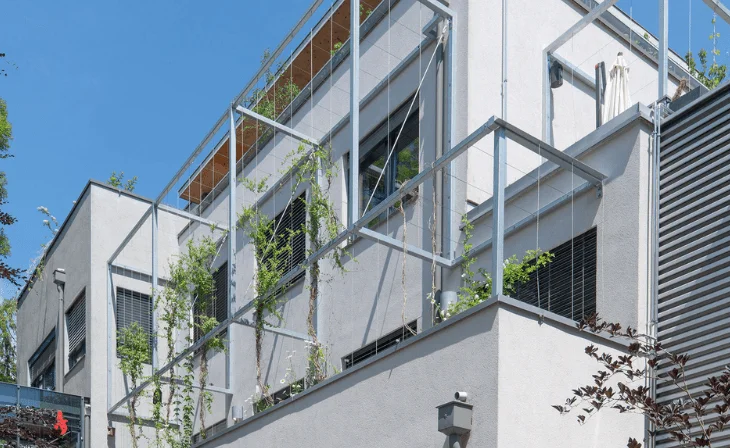
Innovative greening measures are being implemented on an existing building and monitored scientifically. The findings are intended to help local authorities, planners and the construction industry design climate-resilient buildings and cities in an even more targeted manner in future.
An investment in people and the environment
Plants on façades and roofs act as natural climate regulators. They provide shade, evaporate water and help to noticeably cool buildings and their surroundings. It is not only the building’s occupants who benefit from a more pleasant indoor climate and reduced cooling requirements. Public spaces also become more pleasant places to spend time – an important aspect for liveable cities in times of rising temperatures.
At the same time, new habitats are created for insects, birds and other animal species. Green buildings thus make a valuable contribution to biodiversity and help to retain rainwater. This relieves the strain on the sewerage system during heavy rainfall and supports sustainable water management in densely built-up urban areas.
Research provides guidance for practical application
To ensure that the potential of green roofs can be utilised even more effectively in future, the ‘HeinrichBiCool’ project is comprehensively measuring the effects on temperature, energy consumption and biodiversity. The scientific data provide a sound basis for future construction and renovation projects and help to plan investments in climate-resilient buildings on a fact-based basis.
A model with an impact beyond Graz
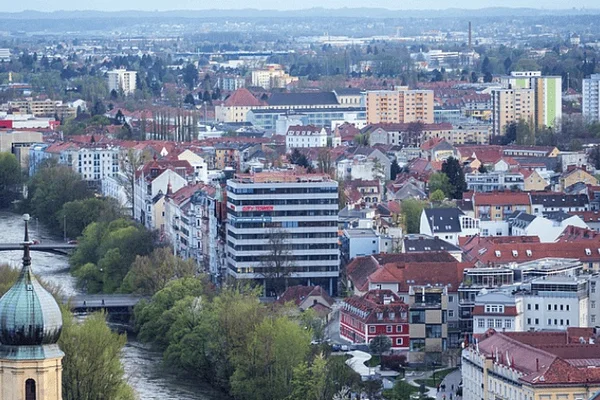
The University of Graz’s demonstration project serves as a prime example of how existing buildings can be made fit for the future using relatively simple measures. The findings extend far beyond the campus: they provide valuable inspiration for towns and local authorities seeking to make public spaces more liveable, reduce energy costs and, at the same time, contribute to climate protection and climate adaptation.
#schongenial – it’s brilliant when green buildings can become a key component of sustainable urban development.