The expansion of public transport is therefore far more than just an infrastructure project: it connects people with workplaces, education and leisure activities, improves quality of life and makes a crucial contribution to climate protection. Investments in buses, trams and underground trains lay the foundations for growing cities to remain efficient, sustainable and liveable in the future.
Vienna is investing in the mobility of the future
For years, Vienna has been one of the cities with the most efficient public transport networks in Europe. With the extension of the U2 and the new U5, Austria’s largest climate protection and infrastructure project is currently under way. New stations are opening up growing neighbourhoods, relieving pressure on existing lines and increasing the network’s capacity in the long term. At the same time, the city is investing in new tram connections and modern mobility solutions to further facilitate the switch from cars to public transport.
Precision underground: Doka as a technology partner
Ensuring that a once-in-a-century project such as the Vienna Metro expansion can be completed on schedule requires far more than just heavy construction machinery. What is needed are high-precision engineering services from Doka.
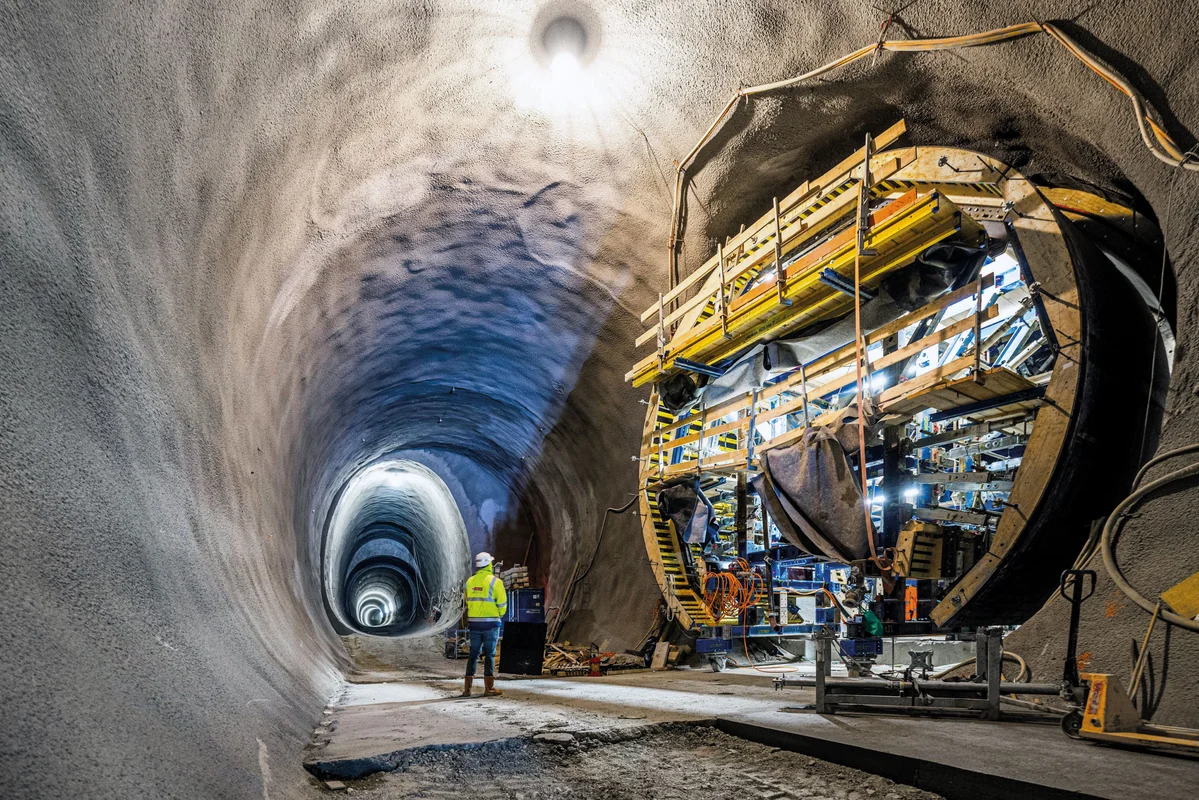
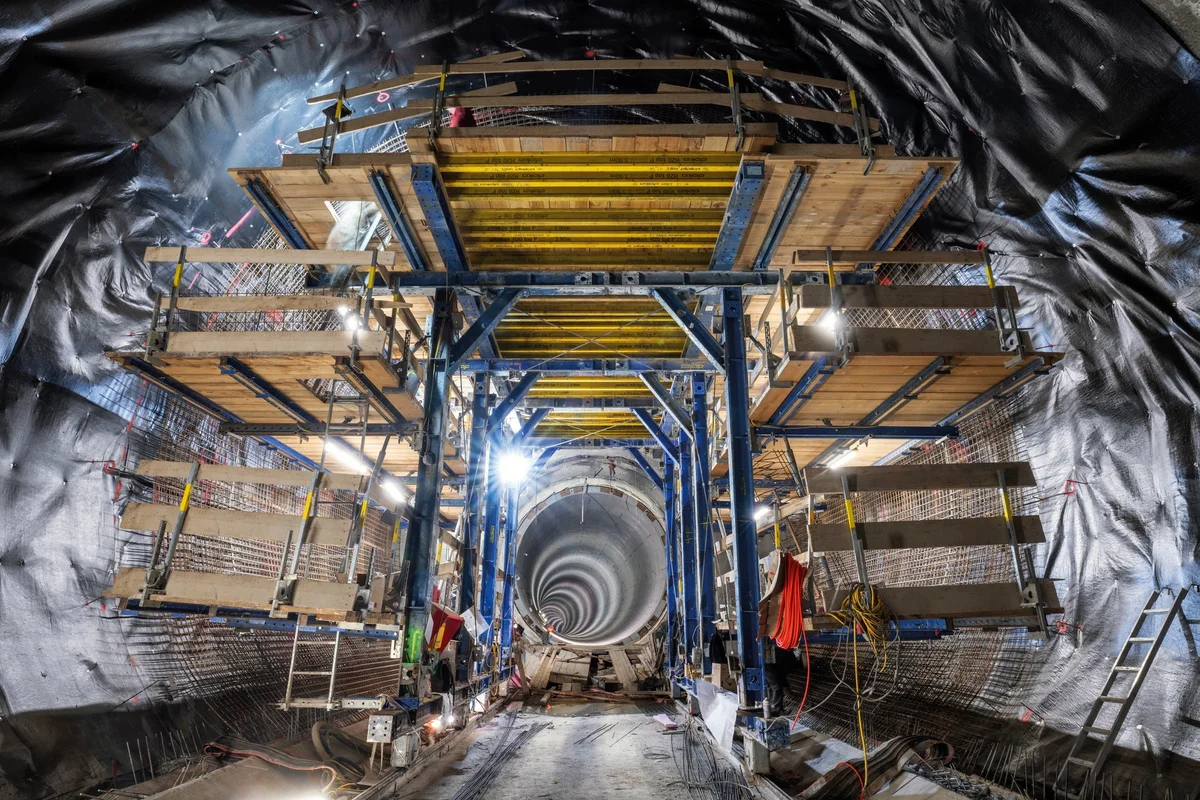
For the expansion of the U2 and U5 lines, the Amstetten-based company is developing bespoke formwork solutions for tunnels and stations. Particularly challenging are those sections of the project where tunnel tubes converge at different angles or where complex structural geometries arise. These areas are digitally modelled in 3D as early as the planning phase, before project-specific formwork systems are developed.
Another advantage is that many formwork units are pre-assembled as part of the turnkey service and can be deployed quickly on site. At the same time, Doka relies on modular systems whose components can be reused and deployed across different construction phases. This reduces material consumption, saves time and increases the project’s cost-effectiveness.
Infrastructure is created through collaboration
Major infrastructure projects are a team effort. Whilst the public sector sets the mobility strategy and construction companies take charge of its implementation, specialist technology partners such as Doka provide the technical solutions for complex construction tasks. The example of the Vienna Metro expansion demonstrates this impressively: sustainable mobility begins long before the first train runs – namely with innovative planning, precise engineering and intelligent construction technology. #schongenial.