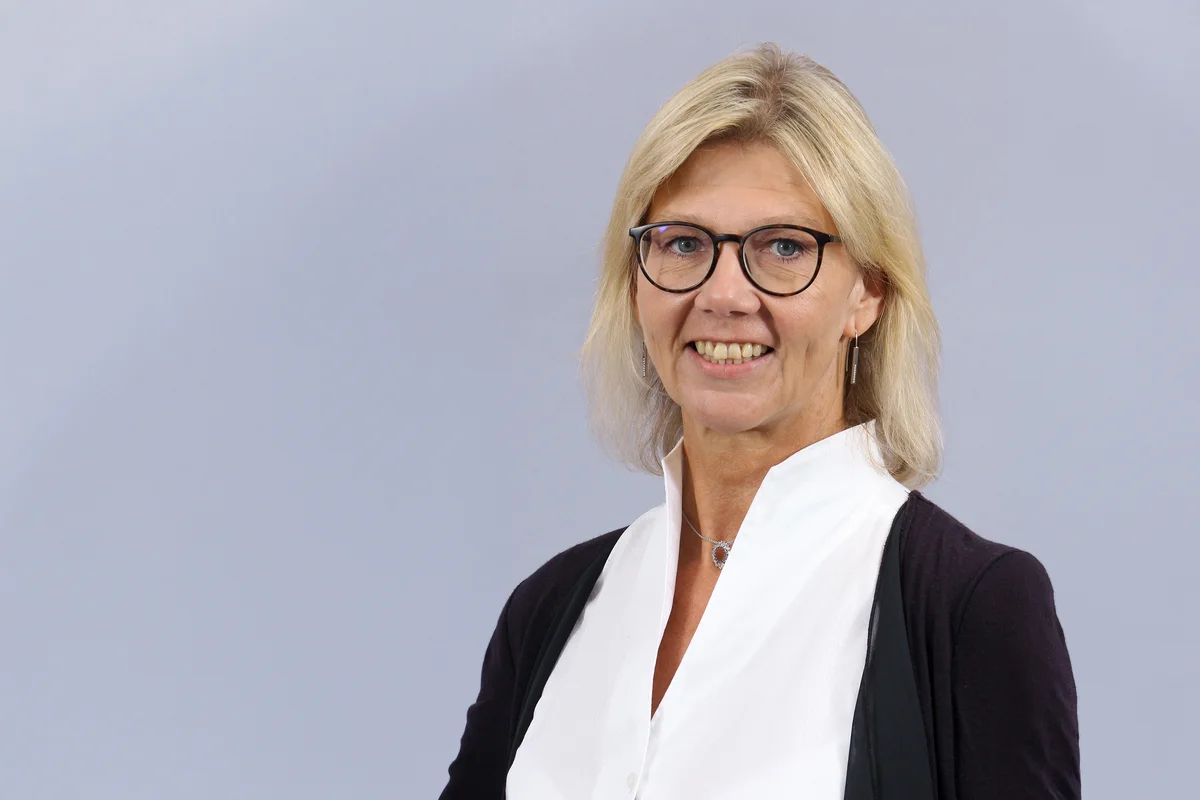
One of them is Karin Daume, Deputy Head of Reinsurance at Oberösterreichische Versicherung. Alongside her day job, she volunteers with the telephone counselling service, offering people in difficult situations something particularly valuable: time, attention and a listening ear. In an interview with #schongenial, she talks about her motivation, moving experiences and why even a single conversation can make a difference.
#schongenial: What inspired you to volunteer with the telephone counselling service?
Karin Daume: For around 20 years, I’ve been deeply involved in personal development and working with people. I’ve completed various training courses, including as a resilience coach and as a life and social counsellor specialising in logotherapy and existential analysis according to Viktor E. Frankl. During the pandemic, I lost many clients due to the lockdowns. I really missed working with people. That’s why I decided to start my training with the telephone counselling service.
#schongenial: What does a typical shift look like, and what sort of issues do people contact you about?
Karin Daume: I work exclusively on the phone. During the day, there are usually two of us on duty, though each of us has our own office. After a brief handover, we get started. Our callers are a reflection of society: people of all ages get in touch with a wide variety of issues. These range from loneliness and family conflicts, through illness and grief, to anxiety or suicidal thoughts.
#schongenial: How do you deal with emotionally draining conversations?
Karin Daume: A major challenge is remaining open and neutral, even when personal values clash. Our training programme, which lasts around 14 months, prepares us thoroughly for this. Supervision sessions, debriefing discussions and exchanges with colleagues also help. I also have a personal ritual to mark the end of a session: I destroy my notes and consciously close several doors behind me. That way, I manage not to take the emotional strain home with me.
#schongenial: What do you personally gain from this voluntary work?
Karin Daume: Even if just a single conversation helps someone to find new courage or feel a sense of relief, it was a job well done. Often, simply listening attentively is enough, because people aren’t always looking for solutions. This experience also shapes my everyday life. Sometimes, after a shift, my own problems seem smaller and my satisfaction with life greater.
#schongenial: How do you balance your job, private life and voluntary work?
Karin Daume: It usually works very well. I can plan my shifts well in advance using an online calendar and take into account periods of high workload at work. The night shifts, however, are challenging – particularly when it comes to recovering afterwards.
#schongenial: Which skills from your voluntary work are also valuable in your professional life?
Karin Daume: Listening, treating others with respect and working out solutions together – these are skills that are important in all areas of life.
#schongenial: How can companies encourage voluntary work?
Karin Daume: My voluntary work takes place exclusively in my spare time. However, companies could raise the profile of committed employees, for example through interviews in internal publications, mentions at events or dedicated days of action focused on volunteering. This draws attention to the issue and might motivate others to get involved.
#schongenial: What advice would you give to people who’d also like to get involved?
Karin Daume: It’s important to honestly consider how much time you can commit, which activities suit you, and whether your personal circumstances are supportive. You mustn’t neglect your own mental health either. Our society thrives on the many people who volunteer their time. Every contribution, no matter how small, counts. And voluntary work gives you so much in return because it is meaningful and gives life purpose. As Viktor E. Frankl put it: ‘The meaning of life is to give life meaning.’
#schongenial: Thank you very much for your #schongenial commitment and for taking the time to do this interview.