Instead of mere facts about brewing processes, guests were treated to a “brewery tour with a difference”: three stops featuring short talks, all set against the backdrop of a vibrant, traditional brewery. Amidst the brewing kettles and storage vats, it became clear just how powerfully community, attitude and optimism for the future can work together. It was precisely this blend of regional roots and substantive depth that made the evening a striking example of how spaces for dialogue can emerge that both inspire and unite.
Confidence as an economic force
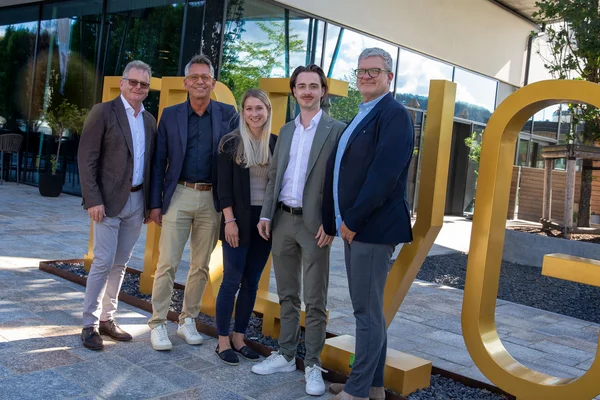
Alfred Fiedler, founder of #schongenial, kicked things off with four key theses that ran like a thread through his talk. His first message was clear: confidence is not merely a feeling, but a tangible economic factor. Especially in times of multiple crises, it determines whether companies remain capable of acting. Those who are confident recognise opportunities and thereby open up new spaces for innovation.
His second thesis built on this: we need better stories. Traditional unique selling points are no longer enough today, as products become increasingly comparable. What matters is the values a company upholds and the contribution it makes to society and the environment. Good stories combine facts with emotions, build trust and provide guidance in a complex world.
In his third thesis, Fiedler shifted the focus to the labour market. Economic success increasingly depends on whether a company can attract and retain committed people. In this context, purpose becomes a key factor: people do not just want to work, but to make a contribution. Companies that communicate clear values and create a sense of purpose strengthen motivation, loyalty and innovative capacity.
Finally, in his fourth thesis, Fiedler emphasised the importance of exchange and community. Humans are social beings who develop through dialogue. #schongenial is the platform that brings people together, inspires them and creates spaces for genuine encounters. Concrete examples invite, inspire and encourage people to engage in an exchange of experiences – as a basis for new ideas for their own companies.
What we can learn about life from beer
The guests were offered a completely different perspective by psychotherapist Niccola Liedl. She drew on the image of beer brewing and translated the ingredients – water, hops, malt, yeast and time – into key elements of a successful life. Water stood for belonging as a fundamental human need for genuine relationships. Hops symbolised truth and the ability to set boundaries, even if this is sometimes ‘bitter’. Malt became a metaphor for our experiences, which shape and strengthen us, whilst yeast stands for inner development, which often takes place behind the scenes. Finally, she emphasised the importance of time: maturation cannot be forced, but requires patience and trust.
The young psychotherapist’s conclusion: a good life does not have to be perfect, but harmonious. Just like a good beer.
Regional responsibility as a model for success
The event concluded with host Peter Krammer, who bridged the gap between theory and practice. With great passion, he recounted how they had succeeded in re-establishing malting barley cultivation in the region, thereby strengthening local value creation. Particularly important to him was the collaborative partnership with farmers and fair prices throughout the entire supply chain. At the same time, he advocated for the responsible use of resources and demonstrated how tradition and sustainability can form a symbiosis for the benefit of all. His words made it clear just how closely economic success, regional identity and ecological responsibility are intertwined.
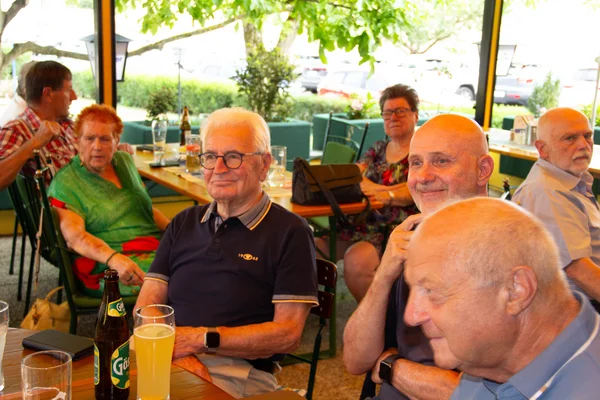
The #schongenial evening concluded with inspiring conversations in the brewery’s Stub‘n. We would like to extend our warmest thanks to the Krammer family for inviting us to this extraordinary evening.