Understanding challenges as opportunities
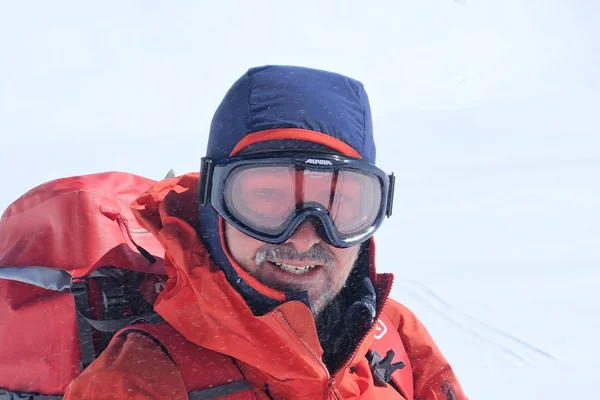
#schongenial is an invitation to consciously focus on success. "Life is like mountain biking," says Fiedler. "It's not the obstacle that matters, but the focus on where we want to go."
At the centre of this is a clear attitude: the economy cannot exist without society, and society cannot exist without an intact ecology. The pivotal point is the human being as the originator, the affected party and, above all, as a responsible creator.
#schongenial is the world's first cross-company social responsibility initiative in eleven languages. The aim is to make positive things visible and, above all, conscious and thus promote a new climate of consumption, investment and innovation based on meaning, appreciation and confidence.
Appreciation strengthens health and resilience
Dr Paul Kaufmann, Medical Director of pro mente Reha Austria, emphasises the health dimension of the initiative: "Appreciation is much more than politeness. It is a central basic human need," emphasises Kaufmann. Scientific findings show that People who feel seen, heard and recognised are mentally more stable, more resilient to stress and less prone to depression, anxiety or burnout.
Physical effects can also be measured: lower stress hormone levels, better cardiovascular values, a stronger immune system and more restful sleep. Neurobiologically, appreciation activates the areas in the brain that are responsible for motivation, trust and social bonding by releasing dopamine and oxytocin.
Mindfulness is a cultural technique that can be trained: "We can only appreciate what we really notice." Consciously visualising positive developments acts as a counterbalance to society's focus on negativity and promotes motivation, cohesion and a willingness to take responsibility.
Trust and mood as growth factors
From an economic perspective, confidence is not a "soft" factor either, but a measurable influence on growth and employment, explains Dr Stefan Fink, Chief Economist at KPMG Austria.
"Key figures such as inflation or GDP are important. They always reflect expectations," says Fink. Studies show that economic and consumer sentiment are closely linked to investment, consumption and employment. Positive expectations can stimulate demand and investment, while uncertainty delays investment decisions.
A differentiated picture is currently emerging for Austria: falling inflation and rising real wages are supporting purchasing power, while the labour market remains comparatively robust. At the same time, uncertainty and cost burdens are dampening the willingness of many companies to invest.
Transparency and reliability in communication are therefore crucial. Communicating opportunities realistically, comprehensibly and credibly strengthens trust and thus creates a key basis for economic dynamism. International examples such as Denmark show that high levels of institutional trust promote the ability to reform and stability.
"If you want economic dynamism, you need to strengthen the basis of trust as well as the material framework conditions," summarises Fink.
Put into practice: mobility support as an expression of social responsibility
The example of the ÖAMTC shows how this attitude can be put into practice. Harald Großauer, Regional Director of ÖAMTC Upper Austria, emphasises: "Mobility is a basic need and a prerequisite for social participation. But it only works with reliability and mutual support."
With more than 2.6 million members across Austria - including over 430,000 in Upper Austria - the mobility club is based on the principle of solidarity and support. In 2025 alone, the mobile breakdown service was called out around 110,000 times in Upper Austria, 40,000 vehicles had to be towed away and a further 130,000 breakdowns were repaired directly at 18 locations.
The club is also involved in air rescue, consumer protection, independent product testing and road safety work for around 20,000 children and young people in Upper Austria every year in line with the principle of "learning through experience".
"For us, appreciation means: helping quickly, taking people seriously and acting in a solution-orientated manner. Social commitment is not an additional project, but an expression of our basic attitude," says Großauer.
An invitation to get involved
#schongenial sees sustainability not as a formal compulsory exercise, but as a question of attitude. From describing to shaping. From focussing on problems to focusing on opportunities.
The initiative invites companies, organisations and people to open a new chapter together: for a responsible consumer climate, a future-oriented investment climate and an open innovation climate.
Because sustainability begins in the thoughts, feelings and actions of each individual and unfolds its effect where confidence, appreciation and responsibility come together.