In doing so, they directly experience how closely economic, ecological and social decisions are interwoven and how individual actions influence the big picture. What initially seems playful often leads to profound aha-moments. In Austria, the game is accompanied by Angelika Pohnitzer, among others. As an initiator and facilitator, she supports people in experiencing global connections on a small scale. In this interview, she talks about her path to the game, recurring dynamics and why a game can sometimes achieve more than a lecture.
#schongenial: Your professional path today takes you into the world of sustainability and transformation education. What experiences, turning points or perhaps even coincidences have brought you to where you are today?
Angelika Pohnitzer: Through my studies in sociology and psychology and later at the Diplomatic Academy in Vienna, I developed a deep understanding of systemic and global contexts at a very early stage. I am passionate about leadership, management and cohesion, i.e. new ways of being and working together.
Through a format on new leadership methods in an integral community in which I was active at the time, I came to sociocracy rather by chance. During a training on sociocratic dialogue management, there was a participant who worked closely with the creators of the 2030 SDGs Game. He invited me to the online version and the experience immediately sparked my interest. When facilitator trainings were offered again in Europe after the pandemic, I said to my colleague: We have to go there. The game is a great tool for raising awareness and fits perfectly with Leadership Associates' sustainability and social change programme.
#schongenial: The 2030 SDGs Game is considered a playful approach to very complex global issues. What convinced you personally so much that you said: "I want to bring this to the world myself"?
Angelika Pohnitzer: What convinced me was my own experience of the game. I first played the online version - Possible World - and was immediately impressed by the "aha" moments it created. In my experience, they are even more impressive in the 2030 SDGs Game, i.e. the map-based version that we offer on site.
I am also impressed by the attitude of the game developers. In the facilitator training, it is very much emphasised that we don't judge, but give all possible worlds the same space. This is sometimes not so easy because we all have our own ideas about what should or should not be done. But it is precisely this openness that makes the game so effective.
No matter how the world develops in the game: We learn from every variation. This combination of experience, realisation and openness has convinced me. I definitely want to pass this on.
#schongenial: You run workshops in companies, universities and NGOs. What dynamics do you observe time and again and what do they reveal about our ability to work together on a sustainable future?
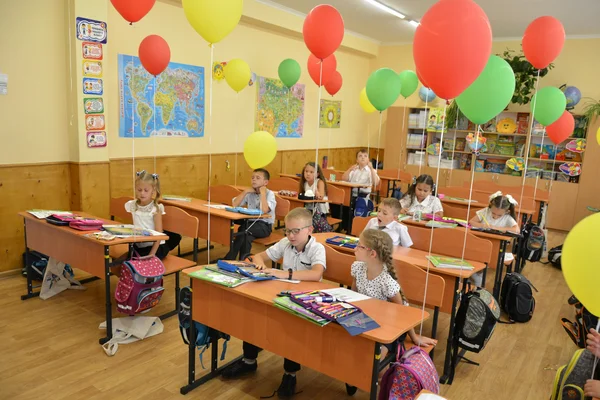
Angelika Pohnitzer: We play the 2030 SDGs Game with children from the age of ten, and one dynamic is evident almost everywhere: the deep-seated focus on "more and more", often without asking how this more is actually to be achieved. In many groups, the players run after money first, even if some of them have completely different goals in the game, such as more leisure time or environmental protection.
This is particularly prevalent in companies and schools, while the opposite is often the case in the non-profit sector: Participants there sometimes overlook the economic aspect. Both extremes show how important it is to keep an eye on the overall system.
Whatever becomes visible: As soon as people have achieved their personal goals, it is much easier for them to look beyond their own horizons and act together. If we draw attention to the common goal in the game, this almost always promotes cooperation and coordination.
Another frequent "aha" moment, especially in the NGO sector, is the realisation that there is actually enough money in the world. It just needs to find its place. And for that, it is crucial to talk about principles, values and goals. Overall, the behaviour in the game reflects very well how people and groups think and act in reality.
#schongenial: Many people report surprising insights after the game. Is there any feedback or a moment that particularly impressed you?
Angelika Pohnitzer: Yes, there are many. Someone once said in reflection that the money goal, which is normally quite easy to achieve, was very difficult for them. While others quickly accumulated wealth, she was very frustrated by her initial situation and the projects she had.
A leadership training programme for women in the non-profit sector was also very impressive. Everyone else had come together at a table in the centre to exchange ideas; only one participant stood apart and tried to solve everything on her own. On reflection, she said: "I do the same thing in real life."
The most powerful insights often come about through one's own person: How did I act? Why? And how is this reflected in my everyday life? Many participants still get in touch weeks later and tell us how much the game has affected them - that's always particularly nice.
#schongenial: What role can a game like this play in social transformation?
Angelika Pohnitzer: Awareness is the starting point for individual and social transformation. And this is exactly where a game is incredibly effective. It playfully creates openness for learning, for new perspectives and for thinking in contexts. People experience complex systems not theoretically, but directly. And that changes things.
The shared reflection is also a very powerful moment. For many, it is new to really listen at eye level and to recognise different perspectives equally. The entire group dynamic often changes during the game and this continues to have an effect afterwards.
One of the game's greatest strengths is the mindset it promotes: a genuine yes-we-can mindset. It shows that every action has an impact and how quickly change is possible when people work together. That is enormously powerful.
#schongenial: Thank you for these #schongenial insights and all the best for the future.