Employment engine and value creator
The economic contribution of family businesses can be impressively quantified. According to the Austrian Economic Chamber, they employ around 1.8 million people2) and are therefore among the country's most important employers. This means that a significant part of the Austrian labour market is directly dependent on family-run businesses.
Their economic performance is also key: family businesses generate an annual turnover of around 394 billion euros2) and therefore make a significant contribution to the country's overall economic value creation and prosperity. Their resistance to crises is particularly remarkable: many of these companies have high equity ratios and pursue long-term investment strategies, which makes them a stabilising factor in times of economic uncertainty.
Long-term orientation as a competitive advantage
What particularly characterises family businesses is their entrepreneurial time horizon. Decisions are often made across generations, not on a quarterly basis. Values such as responsibility, reliability and regional ties play a central role.
The spectrum ranges from one-person companies to traditional craft businesses and internationally successful SMEs. Many of these companies are already in their second or third generation and combine economic success with social responsibility towards employees and the location.
Responsibility and an active corporate culture
In many cases, family businesses see their role not only as economic players, but also as socially responsible organisations. Their actions are characterised by an understanding of values that focuses on long-term thinking, reliability and regional ties. Responsibility is not formulated in theory, but is practised in day-to-day operations.
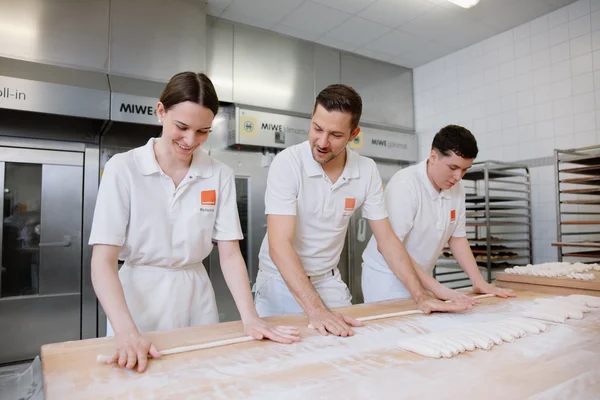
Training young people is a central component. Family-run companies are among the most important providers of apprenticeship training in Austria and thus secure a sustainable supply of skilled labour and expertise. Knowledge and experience are passed down through the generations.
At the same time, many family businesses are firmly anchored in their regions. They make an active contribution to regional development through local involvement, for example in the form of sponsorship for associations or social initiatives. And even in economically challenging times, many pursue the goal of securing jobs through economic cycles.
#It's #schongenial that around 160,000 family businesses are creating stability with foresight, responsibility and consistency where short-termism dominates, and enabling the future where others only think about the next quarter.
1)Source: Austrian Federal Economic Chamber, analysis of family businesses, 2023
2)Source: Austrian Federal Economic Chamber, 2023